Research overview
Selank / Semax Blend: what the research shows
What is in the blend?
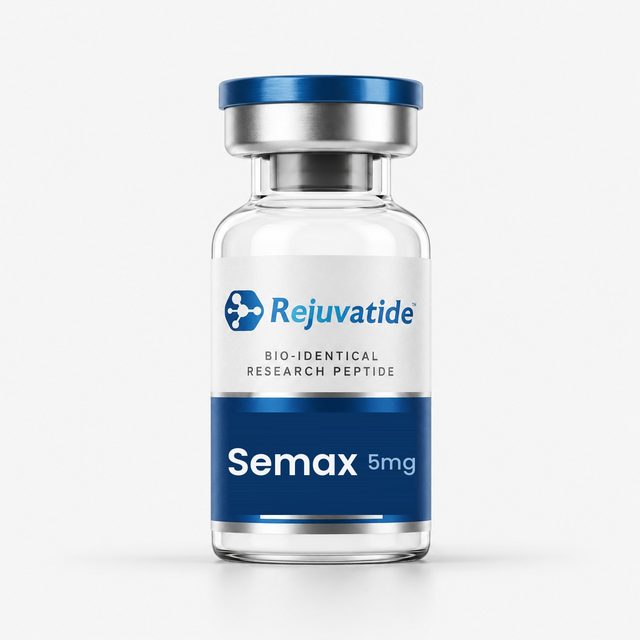
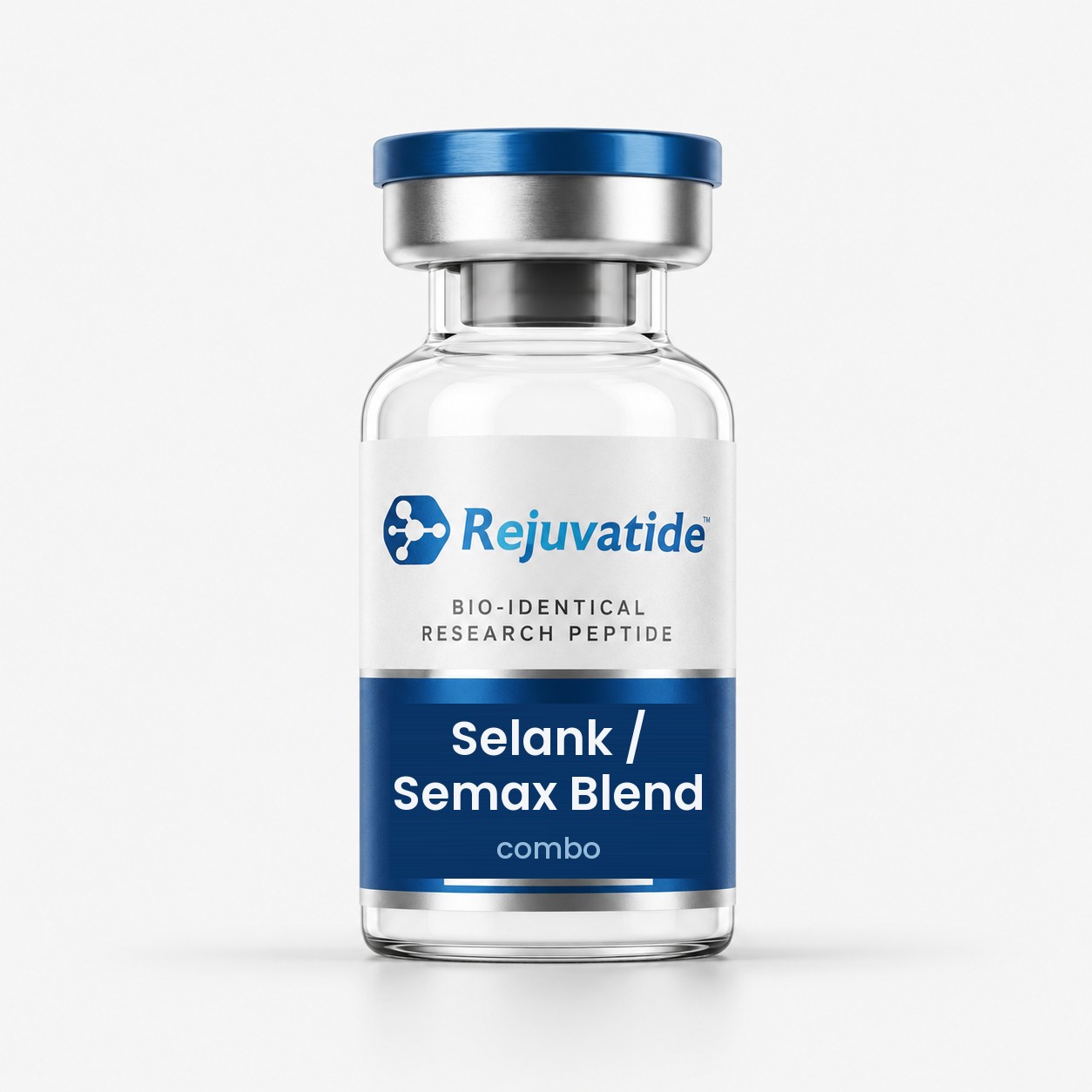
This research blend combines two synthetic heptapeptides in one lyophilized vial, 5mg of each:
- Selank, Thr-Lys-Pro-Arg-Pro-Gly-Pro, a tuftsin analog [1].
- Semax, Met-Glu-His-Phe-Pro-Gly-Pro, an ACTH(4-7) analog extended with Pro-Gly-Pro [2].
Each component has its own research page with a full literature summary, mechanisms, and references. This page covers only what is specific to the pair. Both peptides come from the same Moscow research program, and most of the literature on each comes from a small number of Russian institutes, much of it in Russian.
| Composition | Selank 5mg and Semax 5mg per vial |
|---|---|
| Selank sequence | Thr-Lys-Pro-Arg-Pro-Gly-Pro (TKPRPGP) |
| Selank formula / MW | C33H57N11O9, 751.9 g/mol (PubChem CID 11765600) |
| Semax sequence | Met-Glu-His-Phe-Pro-Gly-Pro (MEHFPGP) |
| Semax formula / MW | C37H51N9O10S, 813.9 g/mol (PubChem CID 9811102) |
Research on the combination
We found no published study that tested Selank and Semax together as a combined preparation. Studies that include both peptides have compared them side by side as separate treatments:
- In rats with 6-OHDA lesions of dopaminergic neurons, neither peptide changed motor activity, while Selank, but not Semax, reduced anxiety-related behavior in the elevated plus maze [8].
- A 2020 resting-state fMRI study in 52 healthy volunteers gave participants either Selank, Semax, or placebo, and reported both shared and peptide-specific changes in functional connectivity between the right amygdala and the right temporal cortex [9].
- The 2001 serum enzyme study tested each peptide separately [3].
Because the pair has not been studied as a combination, there is no evidence that the two interact, add to each other, or behave differently together than apart. Any such question would need to be tested directly. FDA's 2026 briefing document on Semax noted that Semax is marketed online both alone and in combination with Selank [10]; that observation describes the market, not any research finding.
Regulatory status
- Not FDA approved. Neither Selank, Semax, nor any combination of them is approved by the U.S. Food and Drug Administration.
- Semax. At FDA's Pharmacy Compounding Advisory Committee meeting on July 23 and 24, 2026, the committee voted 8 to 5 to recommend Semax for the 503A bulks list, against the FDA staff recommendation [10] [11]. The vote is non-binding.
- Selank. Selank was not reviewed at that meeting. FDA's safety-risks page (content current as of April 22, 2026) lists both Selank acetate and Semax among nominated substances that were later withdrawn, noting possible immunogenicity risks and insufficient human safety information [12].
- Status checked 2026-10-12. See the individual Selank and Semax pages for detail.
Rejuvatide supplies this blend strictly as a research chemical for in vitro and laboratory use. It is not sold for human or veterinary use.
Testing and quality
Every Rejuvatide lot of the Selank / Semax Blend is tested as a finished blend by an independent laboratory for purity by HPLC and identity by mass spectrometry, and is also tested for endotoxin. The current certificates are shown below and in our COA library, where you can match the lot number on your vial to its report. Certificates are published exactly as the laboratory issued them.
Browse all neuroscience research compounds, or see our FAQ for ordering and shipping questions.
Storage of lyophilized material
The blend ships as a lyophilized (freeze-dried) powder, which is stable at ambient temperature during transit. For long-term storage, keep sealed vials at -20°C, protected from light and moisture. Allow a vial to reach room temperature before opening to limit condensation. Handling of any prepared solutions should follow your laboratory's own validated procedures.