Research overview
BPC-157: what the research shows
What is BPC-157?
BPC-157 is a synthetic 15-amino-acid peptide. It reproduces a partial sequence of a larger protein, called body protection compound, that researchers originally isolated from human gastric juice [1]. Because the fragment remains stable in gastric conditions, much of the literature refers to it as a "stable gastric pentadecapeptide."
It has a large research literature in tissue-repair science. A 2025 systematic review identified 544 articles on BPC-157 published between 1993 and 2024, the large majority of them animal and cell studies [7]. Independent reviewers have noted that most of this work used small rodent models and came from only a handful of research groups [5].
BPC-157 is sometimes confused with TB-500 because the two are often studied side by side in tissue-repair research. They are unrelated molecules: TB-500 is associated with thymosin beta-4 and acts through actin regulation, while BPC-157 is a gastric-protein fragment. See our TB-500 research peptide page for that compound.
| Sequence | Gly-Glu-Pro-Pro-Pro-Gly-Lys-Pro-Ala-Asp-Asp-Ala-Gly-Leu-Val (GEPPPGKPADDAGLV) |
|---|---|
| Length | 15 amino acids (pentadecapeptide) |
| Molecular formula | C62H98N16O22 |
| Molecular weight | 1419.5 g/mol |
| CAS number | 137525-51-0 |
| PubChem CID | 9941957 |
| Other names | Body Protection Compound-157, PL 14736, PL-10, PLD-116 (PubChem synonyms) |
Mechanisms studied
Researchers have proposed several overlapping pathways to explain the effects reported in experimental models. None has been confirmed in humans.
Fibroblast migration and the FAK-paxillin pathway
In a 2011 study using tendon explants and cultured tendon fibroblasts from rat Achilles tendon, BPC-157 accelerated explant outgrowth, increased fibroblast survival under hydrogen-peroxide stress, and increased fibroblast migration as concentration rose. It did not directly increase fibroblast proliferation. The authors linked these effects to increased phosphorylation of focal adhesion kinase (FAK) and paxillin [2].
Growth hormone receptor expression
A follow-up study by the same group used cDNA microarray analysis and found growth hormone receptor among the most up-regulated genes in BPC-157-treated rat tendon fibroblasts. Receptor expression rose at both the mRNA and protein level, and adding growth hormone to treated cells increased proliferation and activated JAK2 signaling [3].
Angiogenesis and VEGFR2-Akt-eNOS signaling
In a 2017 study, BPC-157 increased vessel density in the chick chorioallantoic membrane assay and in endothelial tube-formation assays, and accelerated blood-flow recovery in a rat hind-limb ischemia model. In human vascular endothelial cells it increased expression of VEGF receptor 2 (but not VEGF-A), promoted VEGFR2 internalization, and activated the VEGFR2-Akt-eNOS pathway [4].
The nitric oxide system
Reviews from the research group that first described the peptide report interactions between BPC-157 and the nitric oxide system across many rodent models, and propose this as a unifying mechanism for its reported cytoprotective effects [8]. A 2025 narrative review summarized the overall picture as overlapping VEGFR2, Akt-eNOS, and ERK1/2 signaling [6].
Areas of research
Tendon, ligament, and muscle models
Musculoskeletal soft tissue is the most active area of BPC-157 research. A 2019 review of tendon, ligament, and skeletal-muscle studies reported consistently positive healing outcomes in the published models, while noting that most work used small rodent models and that only a handful of research groups had studied the peptide in depth [5]. The 2025 systematic review in orthopaedic sports medicine included 36 studies, 35 of them preclinical, and reported improved functional, structural, and biomechanical outcomes in rodent muscle, tendon, ligament, and bone injury models [7].
Gastrointestinal models
Given its gastric origin, BPC-157 was first studied in gastrointestinal research. Published rodent work covers mucosal injury, models of inflammatory bowel conditions, and fistula models [9] [10]. A 2025 literature and patent review summarizes this preclinical work, including inflammatory bowel disease models, alongside recent patent activity [11].
Wound and vascular models
Reviews have compared BPC-157 with standard angiogenic growth factors such as EGF, FGF, and VEGF across gastrointestinal, tendon, ligament, muscle, and bone healing models [12], and summarized its study in skin-wound models [13].
Open research questions
- Whether effects seen in rodents replicate in larger animal models and independent laboratories.
- Pharmacokinetics: preclinical data summarized in the 2025 systematic review describe hepatic metabolism, renal clearance, and a half-life under 30 minutes [7].
- Long-term effects of sustained pro-angiogenic signaling, since blood-vessel formation also plays a role in pathological processes.
State of the human evidence
Human data on BPC-157 remain very limited. A 2025 narrative review counted three small pilot studies in total, one of them a safety and pharmacokinetics pilot, with no large or controlled trials [6]. The 2025 systematic review found one clinical study in its musculoskeletal scope, a retrospective report on 12 people [7], and found no clinical safety data.
Both reviews concluded that BPC-157 should be regarded as investigational until well-designed clinical trials are completed. Findings from animal and cell models should not be read as evidence of safety or benefit in people.
Regulatory status
- Not FDA approved. BPC-157 is not approved by the U.S. Food and Drug Administration for any human use [7].
- Compounding. FDA's list of bulk drug substances that may present significant safety risks (current as of April 22, 2026) shows BPC-157 among substances whose nominations were withdrawn, with the note that compounded drugs containing it may pose a risk of immunogenicity for certain routes of administration [14]. On July 23, 2026, FDA's Pharmacy Compounding Advisory Committee voted 8 to 6 to recommend BPC-157 for the 503A bulks list, against the written recommendation of FDA staff. That vote is a non-binding recommendation, and FDA had not acted on it at the time of this review [15].
- Sport. The World Anti-Doping Agency names BPC-157 under class S0 (non-approved substances), prohibited at all times [16].
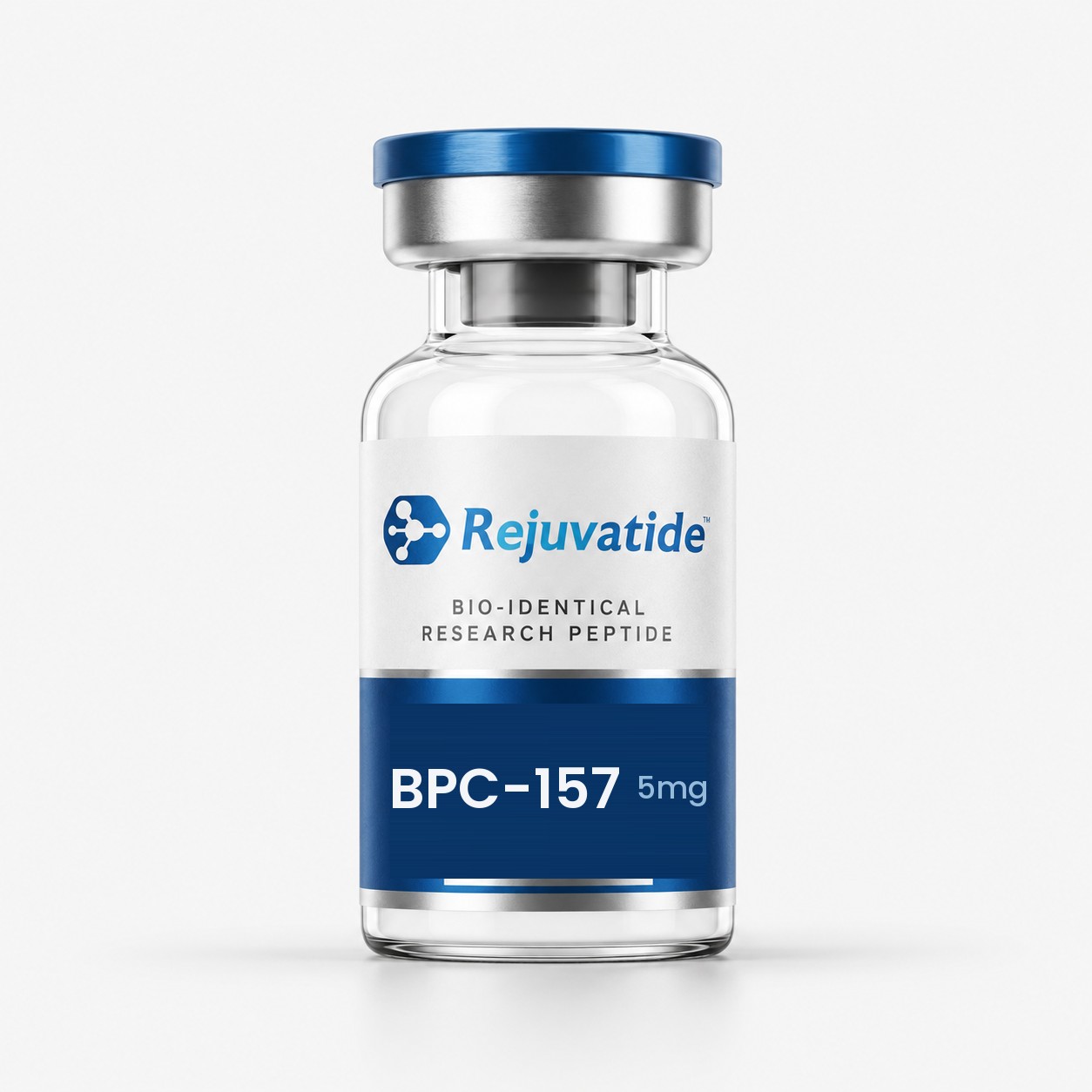
Rejuvatide supplies BPC-157 strictly as a research chemical for in vitro and laboratory use. It is not sold for human or veterinary use.
Testing and quality
Every Rejuvatide lot of BPC-157 is tested by an independent laboratory for purity by HPLC and identity by mass spectrometry, and is also tested for endotoxin. The current certificates are shown below and in our COA library, where you can match the lot number on your vial to its report. Certificates are published exactly as the laboratory issued them.
BPC-157 is also a component of our research blends: Glow Blend, Klow Blend, and Wolverine Blend. Browse related compounds in our tissue-repair research category, or read our BPC-157 research overview article.
Storage of lyophilized material
BPC-157 ships as a lyophilized (freeze-dried) powder, which is stable at ambient temperature during transit. For long-term storage, keep sealed vials at -20°C, protected from light and moisture. Allow a vial to reach room temperature before opening to limit condensation. Handling of any prepared solutions should follow your laboratory's own validated procedures.