Research overview
DSIP: what the research shows
What is DSIP?
DSIP, short for delta sleep-inducing peptide, is a nine-amino-acid peptide with the sequence Trp-Ala-Gly-Gly-Asp-Ala-Ser-Gly-Glu. Its international nonproprietary name is emideltide [1].
It was isolated in 1977 by Schoenenberger and Monnier in Basel from rabbit cerebral venous blood [3]. In their characterization study, the synthetic nonapeptide was compared with five possible breakdown fragments, two analogs, and a related tripeptide in 58 rabbits under double-blind conditions, and only the full synthetic DSIP produced a significant and specific enhancement of delta and spindle EEG patterns [2]. The name comes from that EEG finding.
The research literature is old and uneven. Most of it dates from the late 1970s to the 1990s, with a smaller body of newer work, much of it from Russian institutes. A 2006 review from Moscow described DSIP as "a still unresolved riddle" [3].
| Sequence | Trp-Ala-Gly-Gly-Asp-Ala-Ser-Gly-Glu (WAGGDASGE) |
|---|---|
| Length | 9 amino acids (nonapeptide) |
| Molecular formula | C35H48N10O15 |
| Molecular weight | 848.8 g/mol |
| CAS number | 62568-57-4 (PubChem synonym) |
| PubChem CID | 68816 |
| Other names | Emideltide (INN), delta sleep-inducing peptide (PubChem synonyms) |
Areas of research
EEG and sleep architecture in animals
A 1984 review summarized early work reporting that DSIP mainly increased delta (slow-wave) sleep in rabbits, rats, and mice, with a more pronounced effect on REM sleep in cats, and that the activity curve was U-shaped. The same review noted reported effects on electrophysiological activity, brain neurotransmitter levels, circadian and locomotor patterns, and hormone levels [4].
Neurotransmitter receptor studies
In a 2006 study of rat neurons, DSIP potentiated GABA-activated currents in hippocampal and cerebellar neurons, blocked NMDA-activated potentiation in cortical and hippocampal neurons, and altered calcium uptake into cortical synaptosomes after glutamate and NMDA stimulation [5].
Seizure models
In a 2004 study in Wistar rats given the convulsant metaphit, DSIP and its four-residue fragment DSIP(1-4) increased the power of delta waves and reduced the incidence and severity of audiogenic seizures [6]. This work came largely from one group in Belgrade.
Ischemia models
A 2021 study in Sprague-Dawley rats used a middle cerebral artery occlusion model of focal stroke. Infarct volume was smaller with DSIP than with vehicle but the difference was not statistically significant, while performance on the rotarod motor test recovered significantly faster in the DSIP group [7].
Stability
A 1987 study found that DSIP was degraded rapidly in human and rat blood, with release of tryptophan-like products, while two modified analogs degraded more slowly and formed complexes. The authors suggested that rapid degradation could explain variable effects in vivo [8].
Unresolved questions
Nearly fifty years after its isolation, several basic facts about DSIP remain unknown.
- No known gene or receptor. The 2006 review noted that no DSIP gene, precursor protein, or specific receptor had been isolated, and described the link between DSIP and sleep as "extremely poorly documented" [3].
- A possible precursor. A 2011 database analysis found a sequence in JMJD1B-type histone demethylases that differs from DSIP at two positions, and proposed these proteins as possible precursors of DSIP-like peptides. This remains a hypothesis [9].
- Mechanism. FDA's 2026 briefing review concluded that DSIP's sleep-inducing properties in animals appear to involve opioid-dependent mechanisms without direct opioid-receptor binding, and that its primary mechanisms of action and pharmacokinetic profile are unknown [10].
State of the human evidence
Human data on DSIP are limited, small, and mostly decades old. FDA's 2026 briefing review found that DSIP-related substances have been studied in people since at least 1981, mainly in small numbers of subjects. It noted that no safety data exist for the route proposed by the nominator, that headache, nausea, and vertigo were reported in studies of people in withdrawal, and that safety is insufficiently characterized [10].
A 2009 randomized study in 24 female patients under isoflurane anaesthesia illustrates how unpredictable the human findings have been. Contrary to the authors' hypothesis that DSIP would deepen anaesthesia, it increased heart rate, reduced heart rate variability, and reduced delta rhythm, and the authors concluded it probably lightened anaesthetic depth [11].
Findings from animal and cell models should not be read as evidence of safety or benefit in people.
Regulatory status
- Not FDA approved. Emideltide (DSIP) is not approved by the U.S. Food and Drug Administration for any use. FDA's briefing review found that it is not a registered drug in any country it searched [10].
- Advisory committee vote against. At FDA's Pharmacy Compounding Advisory Committee meeting on July 23 and 24, 2026, the committee voted 6 to 7, with one abstention, against recommending emideltide for the 503A bulks list. It was the only one of the seven peptides reviewed that the committee did not recommend [12] [13]. FDA staff had concluded that a balancing of the criteria weighed against including emideltide (free base) or emideltide acetate [10]. Committee votes are advisory, and FDA makes the final determination (status checked 2026-10-12).
- FDA safety-risks page. FDA's list of bulk drug substances that may present significant safety risks (content current as of April 22, 2026) includes emideltide (DSIP) among nominated substances that were later withdrawn. FDA notes a possible risk of immunogenicity for certain routes, possible complexities with peptide-related impurities and characterization, and that it lacks sufficient information to know whether the drug would cause harm if administered to humans [14].
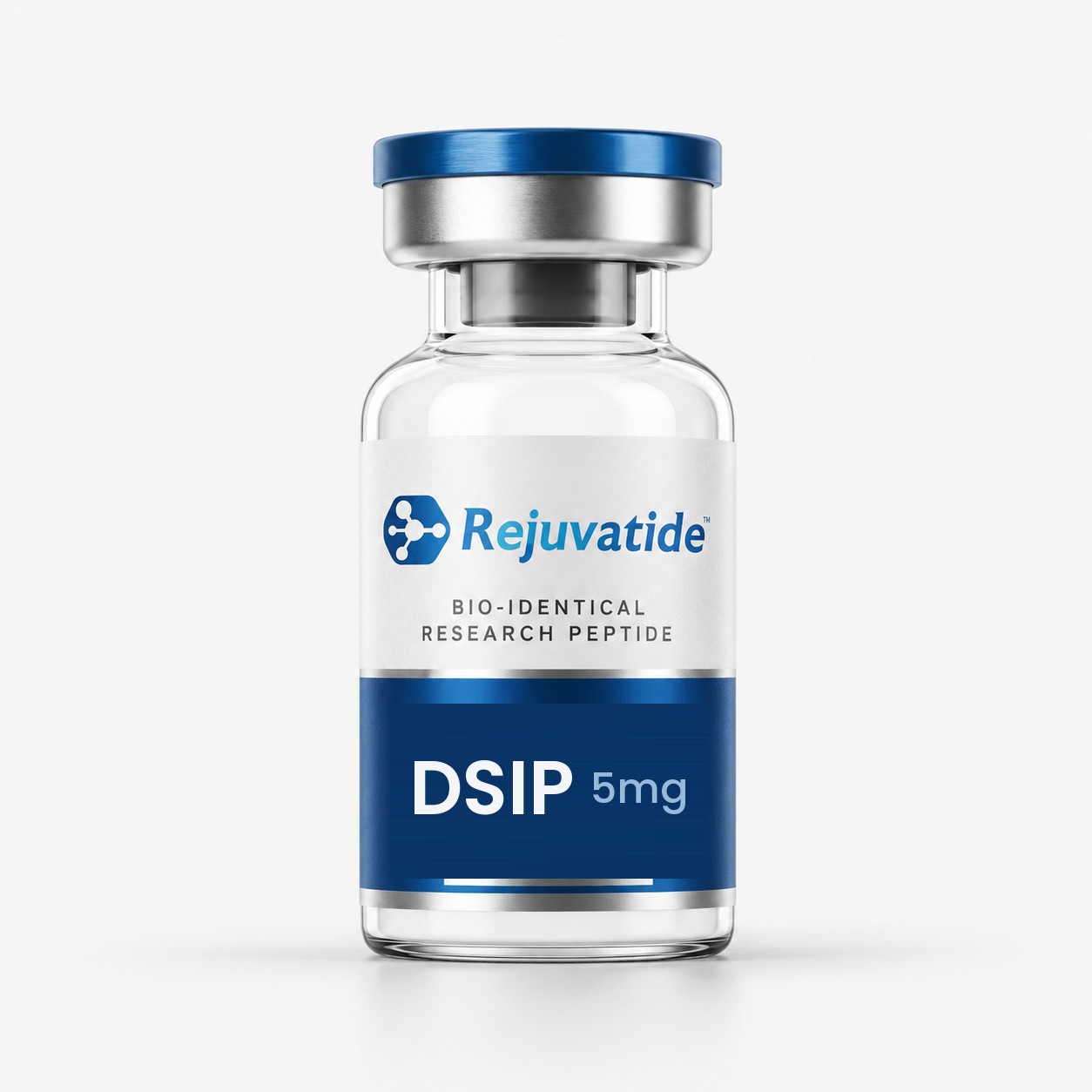
Rejuvatide supplies DSIP strictly as a research chemical for in vitro and laboratory use. It is not sold for human or veterinary use.
Testing and quality
Every Rejuvatide lot of DSIP is tested by an independent laboratory for purity by HPLC and identity by mass spectrometry, and is also tested for endotoxin. The current certificates are shown below and in our COA library, where you can match the lot number on your vial to its report. Certificates are published exactly as the laboratory issued them.
Browse all cognitive and neuro research compounds, or see our FAQ for ordering and shipping questions.
Storage of lyophilized material
DSIP ships as a lyophilized (freeze-dried) powder, which is stable at ambient temperature during transit. For long-term storage, keep sealed vials at -20°C, protected from light and moisture. Allow a vial to reach room temperature before opening to limit condensation. Handling of any prepared solutions should follow your laboratory's own validated procedures.