Research overview
BPC-157 / TB-500 Blend: what the research shows
What is the BPC-157 / TB-500 Blend?
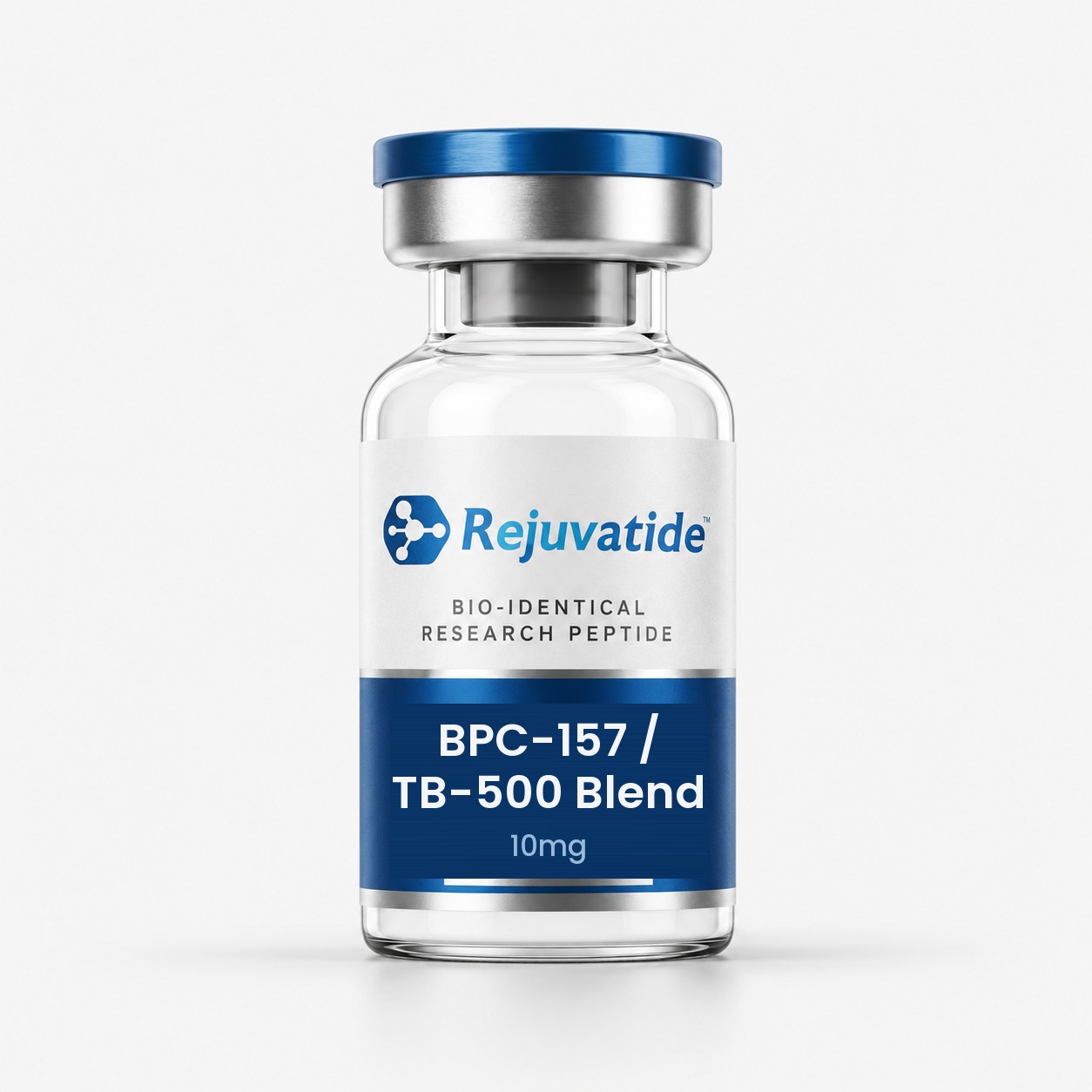
This product combines two research peptides, BPC-157 and TB-500, in one lyophilized vial. They are the two peptides most often discussed together in preclinical tissue-repair research, but they are unrelated molecules with different origins and proposed mechanisms. Each has its own research page: BPC-157 and TB-500.
Research on the specific combination of these two peptides in one vial is limited. Almost everything published concerns each peptide on its own, and the findings summarized below should be read that way. This page makes no claim that the two peptides interact, complement each other, or produce a combined effect.
| Component 1: BPC-157 | GEPPPGKPADDAGLV, 15 amino acids, C62H98N16O22, 1419.5 g/mol (PubChem CID 9941957) |
|---|---|
| Component 2: TB-500 | Indexed by PubChem as Ac-LKKTETQ, the acetylated 17-23 fragment of thymosin beta-4, C38H68N10O14, 889.0 g/mol (PubChem CID 62707662) |
| TB-500 parent protein | Thymosin beta-4, 43 amino acids, 4963 g/mol (PubChem CID 16132341) |
| Identity on current blend certificate | BPC-157 and thymosin beta-4 (LC-MS, as reported by the testing laboratory) |
| Form | Lyophilized powder, both peptides combined in a single vial |
| Available strengths | 5mg/5mg and 10mg/10mg |
The two components
BPC-157
BPC-157 is a synthetic 15-amino-acid peptide reproducing part of a protein originally isolated from human gastric juice [1]. In rat tendon fibroblasts it increased cell migration and survival under oxidative stress, linked to phosphorylation of focal adhesion kinase and paxillin [3]. In endothelial cell and rodent models it was associated with VEGFR2-Akt-eNOS signaling and increased vessel density [4]. A 2025 systematic review in orthopaedic sports medicine found 36 studies, 35 of them preclinical, and concluded that BPC-157 should be regarded as investigational [5].
TB-500
TB-500 is associated with thymosin beta-4, a 43-residue actin-sequestering protein. PubChem and anti-doping laboratories describe TB-500 as Ac-LKKTETQ, an acetylated copy of residues 17 to 23 of thymosin beta-4 that include its central actin-binding domain [2] [6]. The name is also used for synthetic full-length thymosin beta-4. A 2010 review linked the LKKTETQ region of the parent protein to angiogenesis, wound healing, and cell migration in experimental systems [7]. Most published biology concerns the full-length protein, and those findings cannot automatically be attributed to the fragment. See the TB-500 page for a full discussion of identity.
What is known about the combination
We found one published study that compared BPC-157, TB-500, and both together within the same model. In a 2026 exploratory study of surgically repaired Achilles tendons in 32 rats, the TB-500 group showed higher maximum load to failure than controls at four weeks, and both single-peptide groups showed improved histological scores. The group that received both peptides did not show additional improvement compared with either peptide alone. The authors described the findings as preliminary [8].
That study gave the peptides as separate preparations in an animal model. It did not study a pre-combined vial, and no published study we found has characterized the stability or behavior of the two peptides stored together. Human evidence is very limited for BPC-157 and essentially absent for TB-500 as a fragment [5] [9]. Nothing here should be read as evidence of safety or benefit in people.
For background on each compound, see our BPC-157 research overview and browse other compounds in our tissue-repair research category.
Regulatory status
- Not FDA approved. BPC-157 and TB-500 are unapproved peptides, not FDA-approved drugs [10].
- Compounding. FDA's list of bulk drug substances that may present significant safety risks (current as of April 22, 2026) includes both BPC-157 and "Thymosin beta-4, fragment (LKKTETQ), also known as TB-500" among withdrawn nominations, with a possible risk of immunogenicity for certain routes of administration [9].
- Advisory committee vote. At its July 23-24, 2026 meeting, FDA's Pharmacy Compounding Advisory Committee voted 8 to 6, with 1 abstention, to recommend each of BPC-157 and TB-500 for the 503A bulks list, against the recommendation of FDA staff. These votes are non-binding, and FDA had not acted on them at the time of this review [10] [11].
- Sport. The World Anti-Doping Agency 2026 Prohibited List names BPC-157 under S0 (non-approved substances) and "Thymosin-β4 and its derivatives e.g. TB-500" under S2.3 [12].
Rejuvatide supplies this blend strictly as a research chemical for in vitro and laboratory use. It is not sold for human or veterinary use.
Testing and quality
This blend has its own certificate from an independent laboratory, covering HPLC purity of the combined material, LC-MS identity of both components, and an endotoxin result under USP <85>. The current certificate was issued for a 10mg/10mg lot and names the components as BPC-157 and thymosin beta-4. It is shown below and in our COA library, published exactly as the laboratory issued it.
Storage of lyophilized material
The blend ships as a lyophilized (freeze-dried) powder, which is stable at ambient temperature during transit. For long-term storage, keep sealed vials at -20°C, protected from light and moisture. Allow a vial to reach room temperature before opening to limit condensation. Handling of any prepared solutions should follow your laboratory's own validated procedures.