Research overview
ARA-290: what the research shows
What is ARA-290?
ARA-290, which carries the nonproprietary name cibinetide, is a synthetic 11-amino-acid peptide with a pyroglutamyl N-terminus [1]. It was designed from the three-dimensional structure of erythropoietin (EPO). In a 2008 study, its developers identified short peptide sequences that reproduce the aqueous surface of EPO's helix B, and reported that an 11-residue peptide built from that face was tissue protective in rodent models while showing no erythropoietic (red-cell-stimulating) activity in vitro or in vivo [3]. The literature therefore also calls it pyroglutamate helix B surface peptide, or pHBSP.
The research rationale rests on a receptor distinction. EPO stimulates red-cell production through a homodimer of the EPO receptor, while its tissue-protective signaling in non-blood-forming cells was attributed to a different complex, formed by the EPO receptor and the beta common receptor (CD131) [2]. ARA-290 was designed to engage that second complex without acting on the first.
Compared with peptides such as BPC-157, the ARA-290 literature is small, and much of it comes from scientists connected to the company developing the compound. Conflict-of-interest statements to that effect appear in the founding 2008 paper and in later clinical reports [3] [13]. Independent replication is limited, and this page is kept short to match the evidence.
| Sequence | pGlu-Glu-Gln-Leu-Glu-Arg-Ala-Leu-Asn-Ser-Ser (pyroglutamyl N-terminus) |
|---|---|
| Length | 11 amino acids |
| Molecular formula | C51H84N16O21 |
| Molecular weight | 1257.3 g/mol |
| CAS number | 1208243-50-8 |
| PubChem CID | 91810664 |
| Other names | Cibinetide (INN), ARA290, pyroglutamate helix B surface peptide (pHBSP) (PubChem synonyms) |
Receptor biology studied
The EPO receptor and beta common receptor complex
In a 2004 study, membrane proteins from rat brain, heart, liver, and kidney that bound EPO were found in a complex with the beta common receptor, and antibodies against the EPO receptor co-precipitated the beta common receptor from neuronal-like P-19 cells. In beta common receptor knockout mice, EPO and a carbamylated EPO derivative were not active in cardiomyocyte or spinal cord injury models. The authors proposed that the two receptors together form a tissue-protective heteroreceptor [2]. Later papers from the same group named this complex the innate repair receptor [4].
A short-lived signal with longer-lasting effects
A 2015 review by the developers summarized pharmacokinetic data describing a plasma half-life of about two minutes, and discussed why effects reported in animal models outlasted the presence of the peptide in circulation. The authors described the innate repair receptor as typically not expressed by normal tissues and induced by injury or inflammation [4].
Dependence on CD131 in model systems
Two lines of work tied the reported effects to the beta common receptor. In a rat and mouse spared-nerve-injury model, ARA-290 reduced tactile and cold allodynia in rats and wild-type mice but had no effect in mice lacking the beta common receptor [5]. In LPS-activated primary macrophages, the anti-inflammatory effects of cibinetide depended on CD131 and JAK2 function and were mediated through inhibition of NF-kappaB p65 activity [7].
Areas of preclinical research
Neuropathy and nerve-injury models
Neuropathic pain models are the most developed preclinical area. Beyond the spared-nerve-injury work above [5], a group at the University of Sussex studied ARA-290 in a rat neuritis model, in which a nerve is inflamed without frank injury. The peptide prevented the development of mechanical allodynia but did not significantly affect heat hyperalgesia, and the authors did not find changes in TNF-alpha or CCL2 mRNA in the nerve [6].
Inflammation models
In a mouse model of chemically induced (DSS) colitis, cibinetide given after colitis was established was associated with reduced myeloid-cell infiltration and lower production of pro-inflammatory mediators, with tissue integrity better preserved than in untreated mice [7].
Wound models
In an incisional wound model in genetically diabetic (db/db) mice, cibinetide was associated with higher wound VEGF, phospho-Akt, and phospho-eNOS, lower malondialdehyde, and improved re-epithelialization, angiogenesis, and wound breaking strength compared with vehicle [8].
Other tissue-protection models
The founding 2008 study reported tissue-protective effects in rodent models of ischemic stroke and renal ischemia-reperfusion [3].
Open research questions
- How well findings from a small group of laboratories replicate elsewhere.
- How a peptide with a half-life of minutes produces effects reported over weeks in animal models [4].
- How widely the EPO receptor and CD131 complex is expressed across tissues, and under which conditions.
Clinical development history
ARA-290 has a clinical development history, but it is not an approved medicine, and the human studies were small and short. A 2016 review summarized the early clinical evaluation [9]. The published studies include:
- A blinded, placebo-controlled 28-day study [10].
- A phase 2 study [11].
- A phase 2b, 28-day randomized trial of 64 participants, using corneal nerve fiber area as its primary endpoint [12].
- A small phase 2 study in which nine participants were recruited [13].
These were early-phase studies, mostly run by or with the developer, with small samples and surrogate endpoints. They do not establish safety or efficacy, and we do not summarize their results here. Findings from animal and cell models should not be read as evidence of benefit in people.
Regulatory status
- Not FDA approved. We found no FDA-approved drug containing cibinetide in Drugs@FDA (checked October 12, 2026) [15].
- Compounding. FDA's list of bulk drug substances nominated for compounding under section 503A (updated May 14, 2026) lists "Cibinetide (ARA-290)" in category 3, bulk drug substances nominated without adequate support [14]. Cibinetide does not appear on FDA's separate page of bulk drug substances that may present significant safety risks (content current as of April 22, 2026) [16].
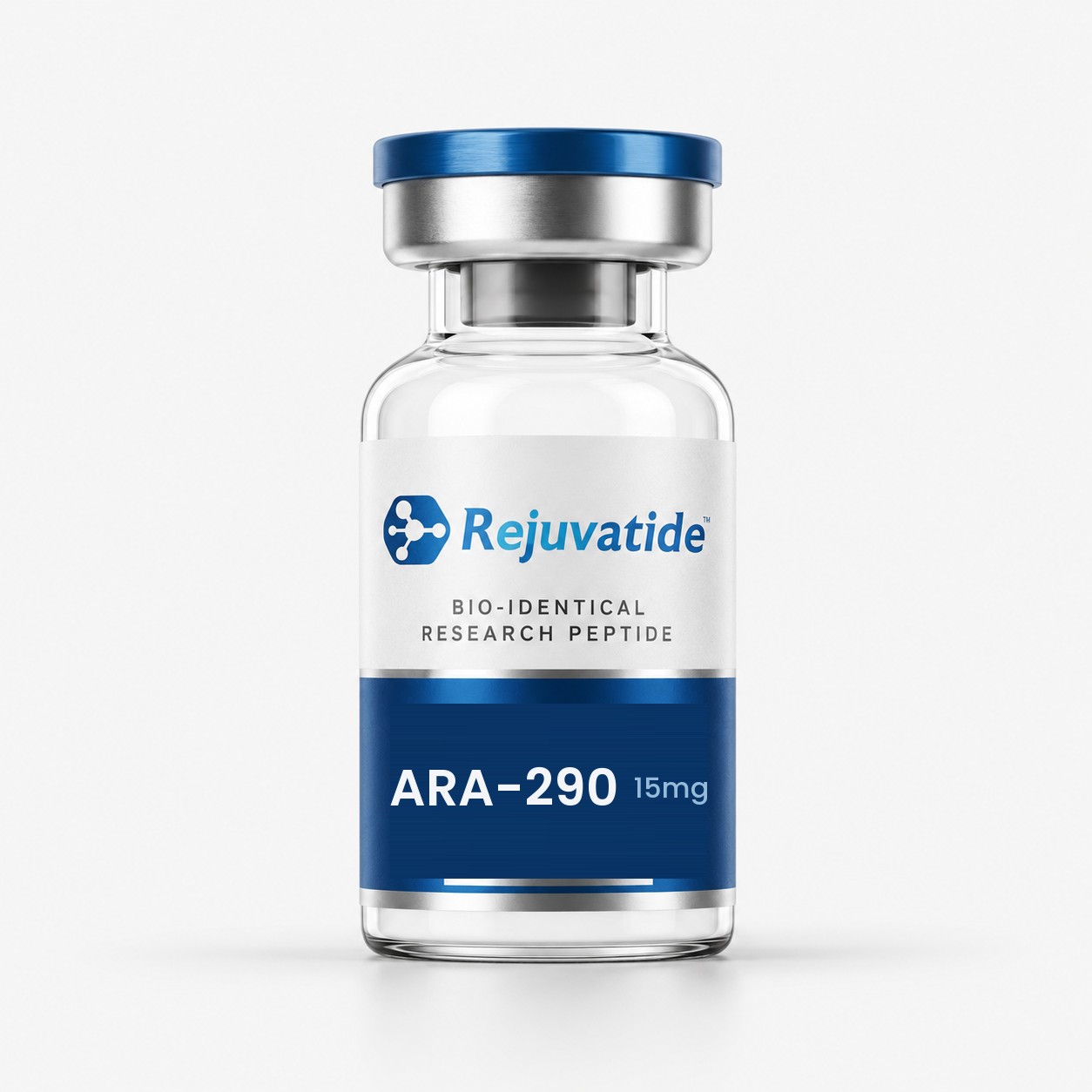
Rejuvatide supplies ARA-290 strictly as a research chemical for in vitro and laboratory use. It is not sold for human or veterinary use.
Testing and quality
The current lot of Rejuvatide ARA-290 was tested by an independent laboratory for purity by HPLC and identity by mass spectrometry, and has a separate USP <85> endotoxin certificate for the same lot. Both certificates are shown below and in our COA library, where you can match the lot number on your vial to its report. Certificates are published exactly as the laboratory issued them.
Browse related compounds in immune and cellular research peptides, or see our FAQ for ordering and shipping questions.
Storage of lyophilized material
ARA-290 ships as a lyophilized (freeze-dried) powder. For long-term storage, keep sealed vials at -20°C, protected from light and moisture. Allow a vial to reach room temperature before opening to limit condensation. Handling of any prepared solutions should follow your laboratory's own validated procedures.