Research overview
Glutathione: what the research shows
What is glutathione?
Glutathione is a tripeptide made of glutamate, cysteine, and glycine. Unlike most peptides, the glutamate is joined to cysteine through its side-chain (gamma) carboxyl group, which is why its systematic name is gamma-L-glutamyl-L-cysteinylglycine [1]. The cysteine thiol is the chemically active part of the molecule.
Glutathione exists in a reduced form (GSH) and an oxidized, disulfide-linked form (GSSG). This product is the reduced form. A 2013 review described GSH as present in all mammalian tissues as the most abundant non-protein thiol, and as a key determinant of redox signaling [2].
Because glutathione is endogenous and central to cell biology, it is used in laboratories both as a subject of study and as a reagent: in redox assays, in enzyme assays for glutathione-dependent enzymes, and as a reference standard. This page describes that research context. It does not cover glutathione products made for human consumption, which are a different category from the material sold here.
| Structure | gamma-L-glutamyl-L-cysteinylglycine (γ-Glu-Cys-Gly), a tripeptide with a gamma peptide bond |
|---|---|
| Form | Reduced glutathione (GSH), free thiol |
| Molecular formula | C10H17N3O6S |
| Molecular weight | 307.33 g/mol |
| CAS number | 70-18-8 |
| PubChem CID | 124886 |
| Other names | L-glutathione, reduced glutathione, GSH (PubChem synonyms) |
Synthesis and redox chemistry
How cells make glutathione
GSH is synthesized in the cytosol in two enzymatic steps. The 2013 review identified cysteine availability and the activity of the rate-limiting enzyme, glutamate cysteine ligase (GCL), as the key determinants of synthesis, with glutathione synthetase (GS) completing the molecule. Expression of these enzymes is regulated by transcription factors including Nrf2, acting through the antioxidant response element, as well as AP-1 and NF-kappaB [2].
Reduction of oxidants and conjugation of electrophiles
A 2009 review described two main protective chemistries: the elimination of oxidants by reduction, and the elimination of electrophiles by conjugation with GSH [3]. The conjugation reactions are catalyzed by the glutathione transferases, three families of enzymes (cytosolic, mitochondrial, and microsomal) that conjugate electrophilic compounds and also inactivate reactive aldehydes, quinones, epoxides, and hydroperoxides formed during oxidative stress [5].
The GSSG/GSH couple as a redox indicator
A 2001 review proposed using the GSSG/2GSH couple to define the redox environment of cells and tissues. It described this couple as the most abundant redox couple in a cell, showed how its half-cell reduction potential can be estimated with the Nernst equation, and associated more oxidizing potentials with the shift from proliferation to differentiation to apoptosis [4].
Protein S-glutathionylation
Glutathione can also form reversible mixed disulfides with reactive cysteine residues on proteins. A 2007 review described this S-glutathionylation as both a response to mild oxidative or nitrosative stress and a post-translational mechanism for regulating signaling and metabolic proteins under basal conditions [6].
Areas of research
Redox signaling
Research has moved from viewing GSH only as a scavenger toward studying it as a signaling molecule. A 2014 review focused on its role in modulating nitroxidative stress, autophagy, and viral infection, and described its involvement in gene expression, DNA and protein synthesis, signal transduction, proliferation, and apoptosis [7].
Ferroptosis
Glutathione is central to research on ferroptosis, an iron-dependent, non-apoptotic form of cell death. The 2012 study that named ferroptosis reported that the small molecule erastin, like glutamate, inhibits cystine uptake by the cystine/glutamate antiporter (system xc-), which the authors described as creating a void in the antioxidant defenses of the cell and leading to iron-dependent oxidative death. It also identified ferrostatin-1 as an inhibitor of the process [12]. Because cystine supplies the cysteine that limits glutathione synthesis [2], this links ferroptosis research directly to glutathione supply. In a 2014 study across cancer cell lines, one class of ferroptosis-inducing compounds acted by depleting glutathione, which inactivated glutathione peroxidases, while a second class inhibited glutathione peroxidase 4 (GPX4) directly. GPX4 overexpression and knockdown changed sensitivity to 12 ferroptosis inducers but not to 11 compounds with other lethal mechanisms [8].
Disease-model biochemistry
The 2013 review summarized evidence that dysregulation of GSH synthesis contributes to conditions including liver and pulmonary fibrosis, cholestatic liver injury, endotoxemia, and drug-resistant tumor cells [2]. In laboratory work, GSH status is therefore a common readout in models of oxidative and chemical stress.
Glutathione transferase biology
The glutathione transferase review also described roles in the biosynthesis of leukotrienes, prostaglandins, testosterone, and progesterone, and genetic polymorphisms in human transferases studied for their association with disease susceptibility [5].
Measuring glutathione in the lab
Because GSH and GSSG interconvert, many studies report both. A 2006 laboratory method describes a microplate assay in which GSH reacts with DTNB to form a yellow product read at 412 nm, while GSSG is converted back to GSH by glutathione reductase in the presence of NADPH, allowing total and oxidized glutathione to be measured. The authors described it as applicable to blood, plasma, tissues, and cell extracts [9].
Reduced glutathione of known purity is used in work of this kind as a standard and as a substrate for glutathione-dependent enzymes. The 2009 review also discussed methods of assessing GSH status in cells [3].
Research grade versus supplements
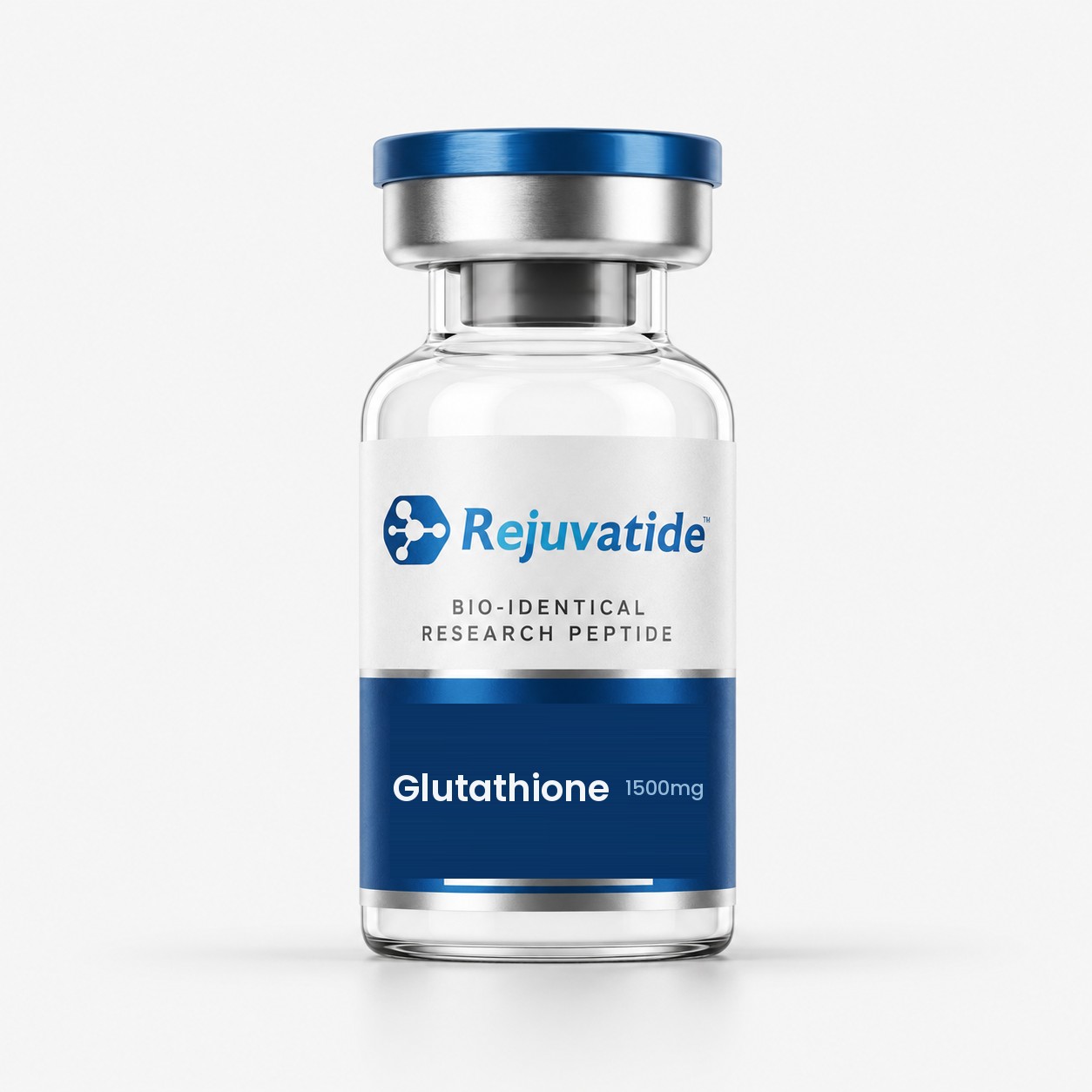
Glutathione is sold in many forms, including consumer products. Rejuvatide's glutathione is not one of them. It is a research chemical supplied for in vitro and laboratory use, labeled for research use only, and not intended for human consumption in any form.
This page reports glutathione biochemistry and laboratory findings only. Human studies of consumer glutathione products are outside its scope, and nothing here should be read as a claim about taking glutathione.
Regulatory status
- FDA drug approval. We found no FDA-approved drug with reduced glutathione as an active ingredient in Drugs@FDA (checked October 12, 2026) [11].
- Compounding. FDA's list of bulk drug substances nominated for compounding under section 503A (updated May 14, 2026) lists glutathione in category 1, bulk drug substances under evaluation [10]. Category 1 means FDA is still evaluating the nomination; it is not an approval.
Rejuvatide supplies glutathione strictly as a research chemical for in vitro and laboratory use. It is not sold for human or veterinary use.
Testing and quality
A lot-specific certificate of analysis for glutathione is not yet hosted on this page. You can request the certificate for your lot through our COA library, and certificates are supplied exactly as the laboratory issued them.
Browse related compounds in immune and cellular research peptides, or see our FAQ for ordering questions.
Storage of sealed material
Glutathione ships as a dry powder in a sealed vial. For long-term storage, keep sealed vials at -20°C, protected from light and moisture. Allow a vial to reach room temperature before opening to limit condensation. Because the reduced form can oxidize to GSSG [9], handling of opened material and any prepared solutions should follow your laboratory's own validated procedures.